Basilica di Sant'Ambrogio: Milan's Oldest Major Church
A Romanesque basilica built on the burial site of Saint Ambrose, with a golden altar, a surviving ciborium, and a crypt holding the city's patron saint.
Editorial guide · Updated 2026-11-02
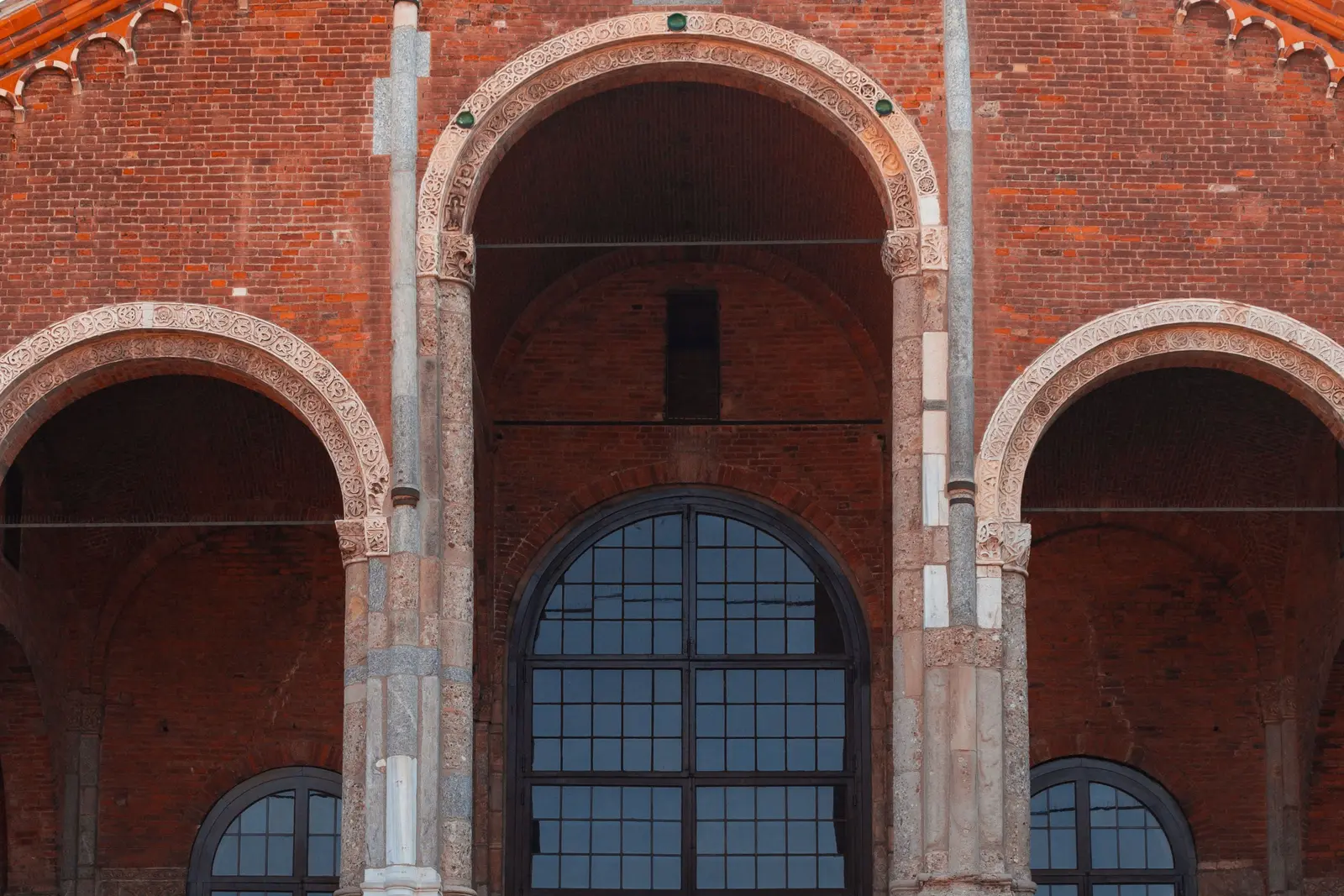
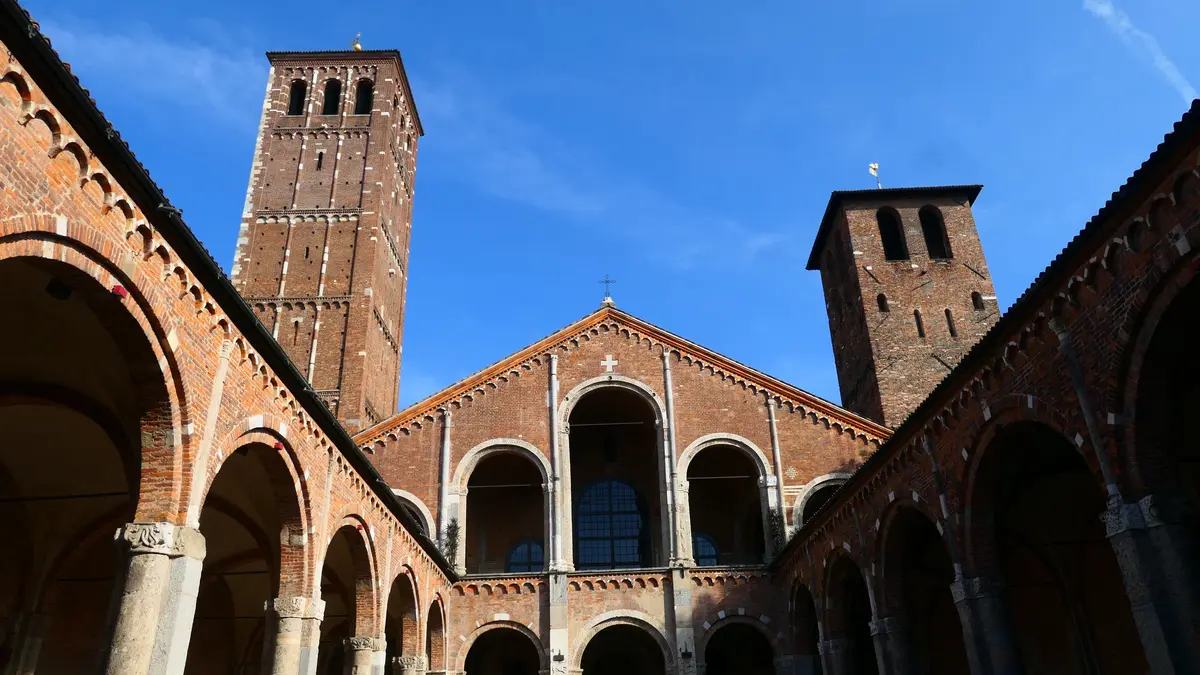
The Basilica di Sant'Ambrogio is one of Milan's oldest churches, built on the burial site of Saint Ambrose, the city's patron saint. What stands today is a Romanesque rebuilding of an earlier church, with a crypt, a golden altar, and an atrium that still gives a sense of the building's original scale.
Visit for the history and the golden altar specifically; this isn't a quick photo stop like some of Milan's other churches.
The Practical Details
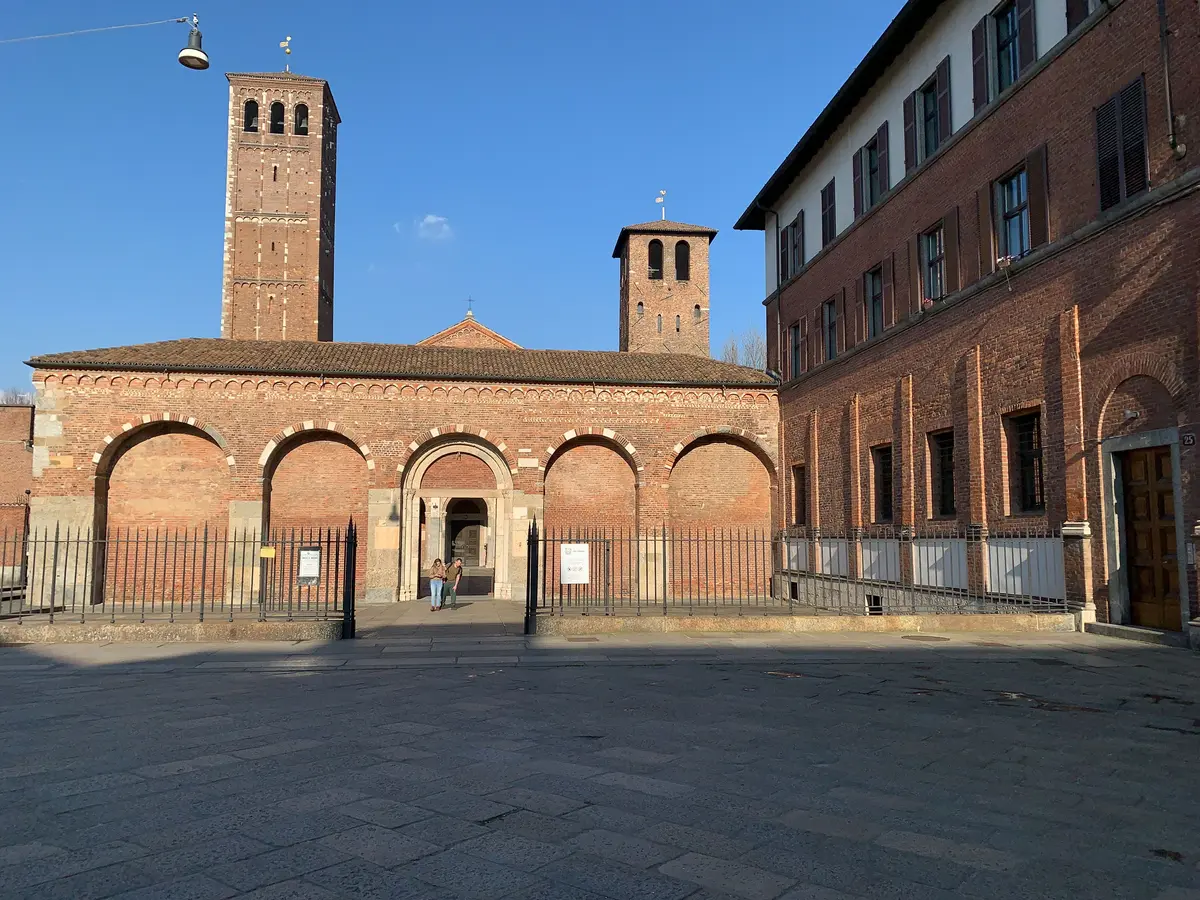
Construction of the first church on this site began in 379, on what was then a necropolis outside the city walls. Ambrose, bishop of Milan from 374, had the bodies of the martyrs Protasius and Gervasius moved into the church in spring 386. The building was known as the Basilica Martyrum. Ambrose died in 397 and was buried beside them. The church was rebuilt entirely in Romanesque style between the late 11th and early 12th centuries, and a second bell tower was permitted in 1128. The atrium in front of the church, along with the monks' bell tower, dates to roughly 824 to 859, and the atrium was repaired in 1631 to restore its Romanesque appearance.
Opening hours: The basilica's own site lists worship hours of Monday to Saturday 7:30 to 12:30 and 14:30 to 19:00, and Sunday and holidays 8:00 to 13:00 and 15:00 to 20:00. Separate sightseeing hours for tourist visits are Monday to Saturday 10:00 to 12:00 and 14:30 to 18:00, and Sunday 15:00 to 17:00. Visits are suspended during services.
Entry fee: General entry to the nave for individual visits is free, according to a tourism listing; we could not find this stated directly on the basilica's own site. A separate treasury and museum area charges its own fee, which we could not confirm.
Closing days: Not confirmed from an official source. The basilica's own site describes it as open every day.
Getting there: Sant'Ambrogio metro station, served by both the M2 and M4 lines, sits right outside. See our guide to getting around Milan for how the metro lines fit together.
Accessibility: Not confirmed from an official source.
The Golden Altar and the Ciborium
The altar's gold front was made between 824 and 859 by the goldsmith Volvinus, commissioned by Archbishop Angilbert II to enclose the relics of Ambrose and the two martyrs. Three of its panels were stolen in 1590 and later restored. During both World Wars, the altar was moved to the Vatican for safekeeping and came back undamaged. Above it, the ciborium, a canopy over the altar, survived the Allied bombing of August 1943 that collapsed the apse, because it had been protected with sandbags.
The Crypt
Below the main altar, a crypt holds the remains of Ambrose, Protasius and Gervasius. Workers found a porphyry tomb containing the relics between 1871 and 1874, and the remains were formally recognised as the three saints'. A new crypt with a glass and silver urn was inaugurated in 1897, and this is what visitors see today.
Sant'Ambrogio sits close to the 5Vie design district. See our Milan Design Week guide for what happens in that neighbourhood during Fuorisalone, and our getting around Milan guide for the rest of the city's transport network.
In pictures
Frequently Asked Questions
Is the Basilica di Sant'Ambrogio free to enter?
General entry to the nave for individual visits is free, according to a tourism listing. We could not find this stated directly on the basilica's own site. A separate treasury and museum area inside the complex charges its own fee.
What are the visiting hours for Sant'Ambrogio?
The basilica's own site lists separate sightseeing hours from worship hours: Monday to Saturday 10:00 to 12:00 and 14:30 to 18:00, Sunday 15:00 to 17:00. Visits are suspended during services.
Who is buried in the Basilica di Sant'Ambrogio?
Saint Ambrose, bishop of Milan, is buried in the crypt alongside the martyrs Protasius and Gervasius. Their remains were placed in a porphyry tomb found in the 1870s and moved to a glass and silver urn in 1897.
What is the golden altar at Sant'Ambrogio?
An altar front made by the goldsmith Volvinus between 824 and 859, commissioned by Archbishop Angilbert II to enclose the saints' relics. Three of its panels were stolen in 1590 and later restored.
Which metro station is closest to the Basilica di Sant'Ambrogio?
Sant'Ambrogio station, served by both the M2 and M4 lines.