Milan Design Week (Fuorisalone): A Neighbourhood-by-Neighbourhood Guide
How Fuorisalone actually works, and which of Milan's design districts — Brera, Tortona, 5Vie, Isola — are worth your limited time during Design Week.
Editorial guide · Updated 2026-09-14
Once a year, Milan becomes the most design-obsessed city on Earth, and almost none of the events that matter require a ticket. Milan Design Week — universally known by the name of its fringe programme, Fuorisalone — turns entire neighbourhoods into free, walkable exhibitions. Most first-time visitors get this wrong in one of two ways: they either treat it as a single event with a single venue, or they try to see everything and see nothing properly. Here's how it actually breaks down.
Salone del Mobile vs. Fuorisalone — Know the Difference
Salone del Mobile is the trade fair: ticketed, industry-facing, held at Fiera Milano Rho on the city's western edge, and genuinely built for furniture buyers and press rather than tourists. Fuorisalone — literally "outside the Salone" — is everything else: thousands of installations, brand activations, gallery shows, and open studios scattered across the city centre, almost all free and open to the public. If you're visiting as an enthusiast rather than an industry buyer, Fuorisalone is the entire trip. Don't waste a day queuing for Rho unless you have a specific professional reason to be there.
Brera Design District
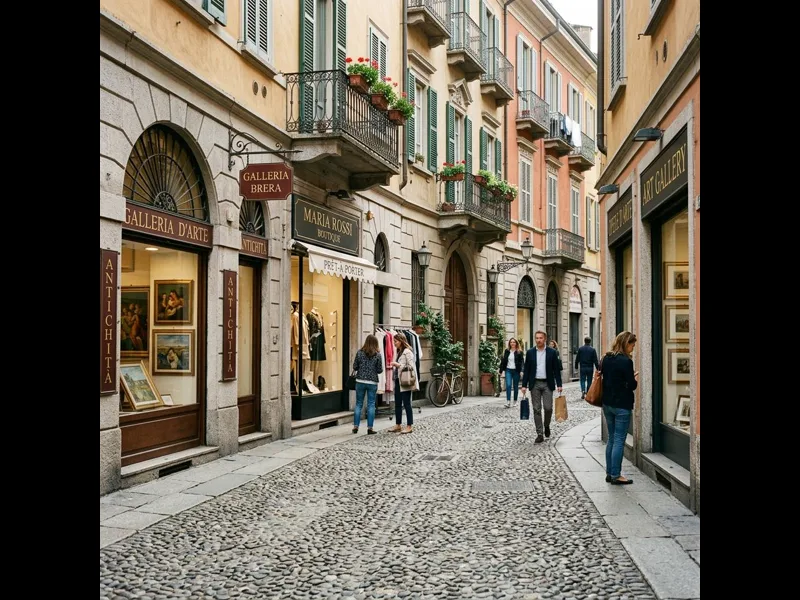
Brera's cobblestone streets already look designed for an exhibition, which is why the Brera Design District — the neighbourhood's own Fuorisalone programme — is consistently one of the most photogenic and least exhausting to walk. Expect lighting installations in courtyard entrances, small galleries throwing open their doors, and a general atmosphere that leans elegant rather than experimental. Good for a first afternoon: dense enough to feel eventful, small enough not to need a plan.
Tortona
Zona Tortona, southwest of the centre around Via Tortona and Via Savona, is where the modern Fuorisalone essentially started — a former industrial district of factories and warehouses that design brands began colonising for large-scale installations decades ago. It's the district for spectacle: big-budget brand activations, immersive installations, the kind of thing that ends up on design-press front pages. It's also the busiest and most spread-out district, so go with a shortlist rather than a wander-and-see plan, or you'll spend more time walking between warehouses than looking at anything inside them.
5Vie
5Vie — named for five historic streets near Sant'Ambrogio, southwest of the Duomo — is the counter-programme to Tortona's scale: small artisan workshops, independent designers, courtyard installations in buildings that predate the concept of "design week" by centuries. It rewards slow walking over a checklist. If Tortona is where design shows off, 5Vie is where it explains itself.
Isola
Isola, north of the centre near Porta Garibaldi, has the youngest and most experimental programme of the four — emerging designers, student projects, installations with more ideas than budget. It's also the district least overwhelmed by crowds, which on a Design Week trip is its own kind of luxury.
Where Design Lives the Rest of the Year
If your trip doesn't line up with Design Week, or you want the permanent version of what Fuorisalone does temporarily, the Triennale di Milano in Parco Sempione is Milan's standing design and architecture museum — a legitimate destination year-round, and the right place to understand why this city takes the subject so seriously in the first place.
Practical Notes
Timing: Fuorisalone runs alongside Salone del Mobile, typically in April — confirm exact dates for your travel year before booking, as they shift annually.
Cost: The overwhelming majority of Fuorisalone installations are free. Salone del Mobile itself requires a paid trade ticket and is not designed for casual visitors.
Crowds: Evenings, especially in Tortona, get genuinely packed with a party atmosphere as much as a design one. Mornings are for looking closely at the work; evenings are for the scene around it.
Don't try to do all four districts in one day. Pick two, walk them properly, and accept that you're seeing a fraction of a citywide event by design — that's the honest way to enjoy it.