Where to Eat in Milan — Restaurants Locals Love
The definitive guide to eating well in Milan — from century-old trattorias to Michelin-starred dining rooms and the panzerotti stands locals treasure.
Editorial guide · Updated 2025-01-01
A City That Takes Eating Seriously
Milan is often mischaracterised as a fashion city that happens to have restaurants, when the truth is closer to the reverse. The city that gave the world risotto alla milanese, cotoletta, ossobuco, and panettone has a culinary tradition as precise and evolved as its design culture. The difference from other Italian food cities is that Milan integrates the international alongside the local — you'll find Milan's best Japanese restaurant a five-minute walk from its most authentic century-old trattoria.
This guide covers both. The trattorias where Milanese families have been eating for three generations. The contemporary restaurants where young chefs are making Italian cooking interesting again. The canal-side dinner destinations. And the street food that no travel guide tells you about properly.
The Milanese Canon: What You Must Eat
Before restaurant recommendations, a brief primer on what to order:
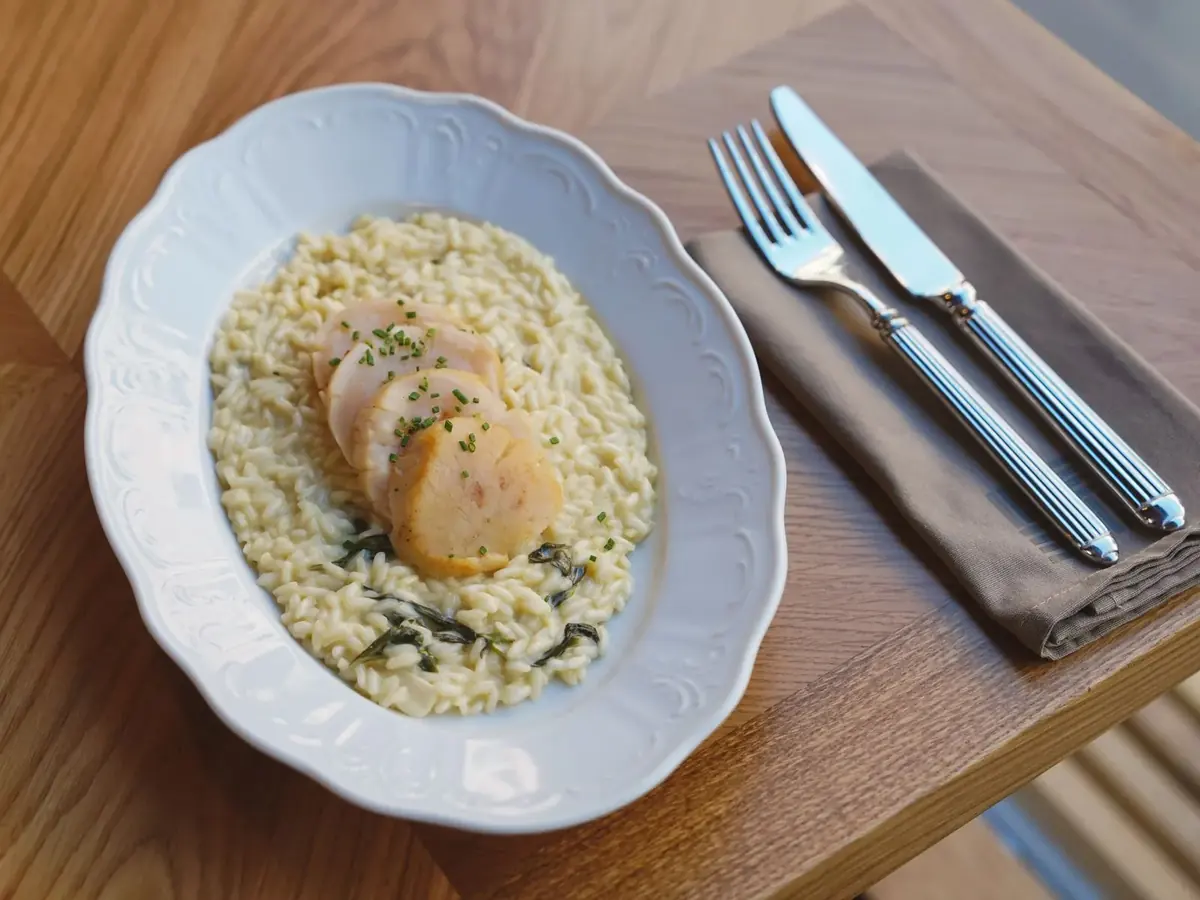
Risotto alla milanese: Arborio or Carnaroli rice, real saffron (the expensive kind), bone marrow, white wine, Parmesan. The colour should be deep gold. The consistency should be loose — all'onda, wave-like. Any restaurant serving this dish correctly is serious. Any restaurant serving it as a stiff, gluey mound is not.
Cotoletta alla milanese: A veal chop, bone-in, breaded in fine breadcrumbs and fried in clarified butter. The crust should be crisp and golden. The meat should be pinkish and juicy. It should be the size of your face. This is not a diet food. Do not eat it with a knife in the English style — eat it with your hands.
Ossobuco: Cross-cut veal shank, braised in white wine with gremolata (lemon zest, garlic, parsley). Always served with risotto alla milanese in Milan. This is the combination; do not deviate.
Panzerotti: Deep-fried dough pockets stuffed with mozzarella and tomato. Milan's street food that Romans claim as their own but Milanese perfected. Luini has been making the definitive version since 1949.
The Trattorias: Where to Eat the Classics
Ratanà (Porta Nuova) is the restaurant where Milanese food professionals go when they want to eat properly. The risotto alla milanese is technically flawless — real bone marrow, proper saffron, the right consistency. The ossobuco arrives already perfect. The wine list is one of the best in the city for Italian producers. Book a week ahead for weekday lunch; two weeks for dinner.
Trattoria Milanese (Ticinese) has been open since 1933 and has not updated its menu, its décor, or its attitude since roughly 1960. This is not a complaint. The cotoletta is enormous, properly fried, perfectly golden. The cassoeula (pork and cabbage stew, winter only) is the best in Milan. Sunday lunch here, with Milanese families at the surrounding tables, is one of the city's great experiences.
Osteria dell'Acquabella (Porta Venezia) charges 1995 prices for food that has improved since then. House wine in carafes, pasta e fagioli, secondi that are genuinely seasonal. The regulars have been coming for decades. You'll be welcomed immediately and will want to come back tomorrow.
Contemporary Dining: Where the City is Going
Carlo e Camilla in Segheria (Navigli) is a converted sawmill with a single long communal table — the most theatrical dining room in Milan. Carlo Cracco's menu is genuinely ambitious and technically accomplished. The communal format means you'll talk to strangers; in Milan, this produces better conversation than you'd expect. Book weeks ahead.
Berton (Porta Nuova) is Andrea Berton's Michelin-starred expression of contemporary Italian cooking. Technically flawless, visually precise, and rooted enough in Italian tradition to be emotionally satisfying as well as intellectually impressive. The lunch menu is Milan's best value for cooking of this quality.
Nebbia (Isola) is what happens when someone in Milan takes natural wine and fermentation as seriously as a Copenhagen restaurant. The tasting menu is revelatory — vegetables, grains, and proteins treated with the same respect as Lombardy's finest ingredients. The dining room is tiny; the waiting list is real.
Langosteria (City Centre) is where to go when someone else is paying. Raw bar, oysters, crudo that sets the benchmark for the city. The fashion industry uses it as a canteen. The prices are correct for what they're doing.
The Street Food You Need to Know
Luini (Via Santa Radegonda, City Centre): Panzerotti since 1949. Fried dough pockets — mozzarella and tomato, or spinach and ricotta — eaten standing on the pavement outside. Open Tuesday to Saturday until 15:00. There is always a queue. The queue moves quickly. The panzerotto is worth every minute of it.
Mercato Metropolitano (Porta Romana): A permanent food market in a former industrial space — dozens of vendors doing genuine regional Italian food, natural wine, craft bread, good coffee. Not street food exactly, but the most interesting casual dining destination in the city.
Canal-Side Dining
The Navigli canal district is where to go for dinner that begins with atmosphere and ends with good food. El Brellin is the peak of this — an 18th-century wash-house directly over the Naviglio Grande, risotto and brasato al Barolo, and a terrace where you can watch the canal. Book the terrace specifically; ask for it explicitly.
Dry Milano Navigli serves some of the best pizza in the city alongside a cocktail list that takes itself seriously. Neapolitan dough, Lombard ingredients, and a negroni that you'll order two of. Queues form early; booking is available and worth using.
The Rice Question
The single best way to evaluate any Milanese restaurant is to order the risotto. A kitchen that serves risotto alla milanese correctly — with real saffron, real bone marrow, the right consistency — is a kitchen that is serious about what it does. A kitchen that serves a pale, stiff, saffron-lite version of it is a kitchen that has given up on precision. For the full story of the dish — and Milan's other defining export, panettone — see our dedicated guide.
Ratanà makes the best version in Milan. Trattoria Milanese makes the most honest version. Most restaurants in between do it adequately. A few do it very badly. Order it wherever you eat; it will tell you everything you need to know about the kitchen.
Practical Notes
Lunch: Most Milanese trattorias serve lunch between 12:30 and 14:30. The kitchen closes at 14:30. If you arrive at 14:00, you will be seated but the staff will let you know, politely, that this was close.
Dinner: Milaneses eat dinner late by Northern European standards — kitchens don't get busy until 20:30, and the best tables (for conversation purposes) fill between 21:00 and 22:00. Booking for 20:00 is early; 21:00 is correct.
Booking: Any restaurant in this guide worth eating at requires a reservation. Book via the restaurant website or call. Same-day availability exists for lunch on weekdays; dinner is booked two to seven days ahead.
Price context: Budget (under €25/person), mid-range (€25–60), luxury (€60+). These are estimates for food; wine adds 40–100% depending on what you choose.
Coffee: After any of the above, find a bar and stand at the counter for an espresso. Sit-down espresso costs three times as much and tastes the same. The standing counter is the correct way to drink coffee in Milan.
More From a Milan Local
The restaurants above are the ones we'd put in front of any visitor. This list is different — it's what a Milanese local actually recommends to friends, carried over largely as given, address-checked but not independently reviewed the way the picks above were.
The special-occasion meal: DaV by Da Vittorio has two Milan outposts — Piazza Tre Torri in CityLife, and inside the Louis Vuitton store on Via Bagutta — both carrying the name of the original three-Michelin-star Da Vittorio in Brusaporto, near Bergamo. If you can spend a full day on one meal, the Bergamo original is the one locals call an "insane experience" and mean it literally.
Neighbourhood osterias: Osteria La Vecchia Lira (Largo la Foppa 5, Moscova/Brera) — order the risotto alla milanese specifically. Osteria del Binari (Via Tortona 1/3, Tortona/Navigli). Trattoria Vecchia Arena (Piazza Lega Lombarda 1, Moscova). Al Fresco (Via Savona 50, Tortona). Dal Bolognese (Via Amedei 8, near the Duomo). Da Giacomo (Via Pasquale Sottocorno 6, Porta Venezia) — order the risotto allo zafferano. Tommasi (Piazza Giovine Italia 2, near Cadorna). Al Cortile (Via Giovenale 7, Ticinese). Penelope a Casa (Via Ripamonti 3, Porta Romana). Un Posto a Milano, the restaurant inside Cascina Cuccagna (Via Cuccagna 2, Porta Romana).
Rovello 18 has moved since you may have heard of it — it's now at Via Tivoli 2, in the Garibaldi area, not its old Brera address.
Osteria da Fortunata (two locations: Via Fiori Chiari 13 in Brera, Via della Moscova 52) doesn't take reservations — arrive right at opening or expect a wait.
Rome in Milan: Felice a Testaccio, the Roman institution, has had a Milan branch since 2017 (Via del Torchio 4, near the Colonne di San Lorenzo).
A different kind of room: LùBar, inside Villa Reale (Via Palestro 16, Porta Venezia), puts you in a neoclassical villa's garden — worth it for the setting as much as the food.
Pizza: La Pizzeria Nazionale (Via Palermo 11, Brera). Sorbillo, the Naples institution, now has a Milan branch near the Duomo. Da Zero (Via Bernardino Luini 9, behind Corso Magenta, plus a Brera location). Taglialà, facing the Arco della Pace on Piazza Sempione — see our aperitivo guide for why that location in particular is worth timing around aperitivo hour.
In pictures