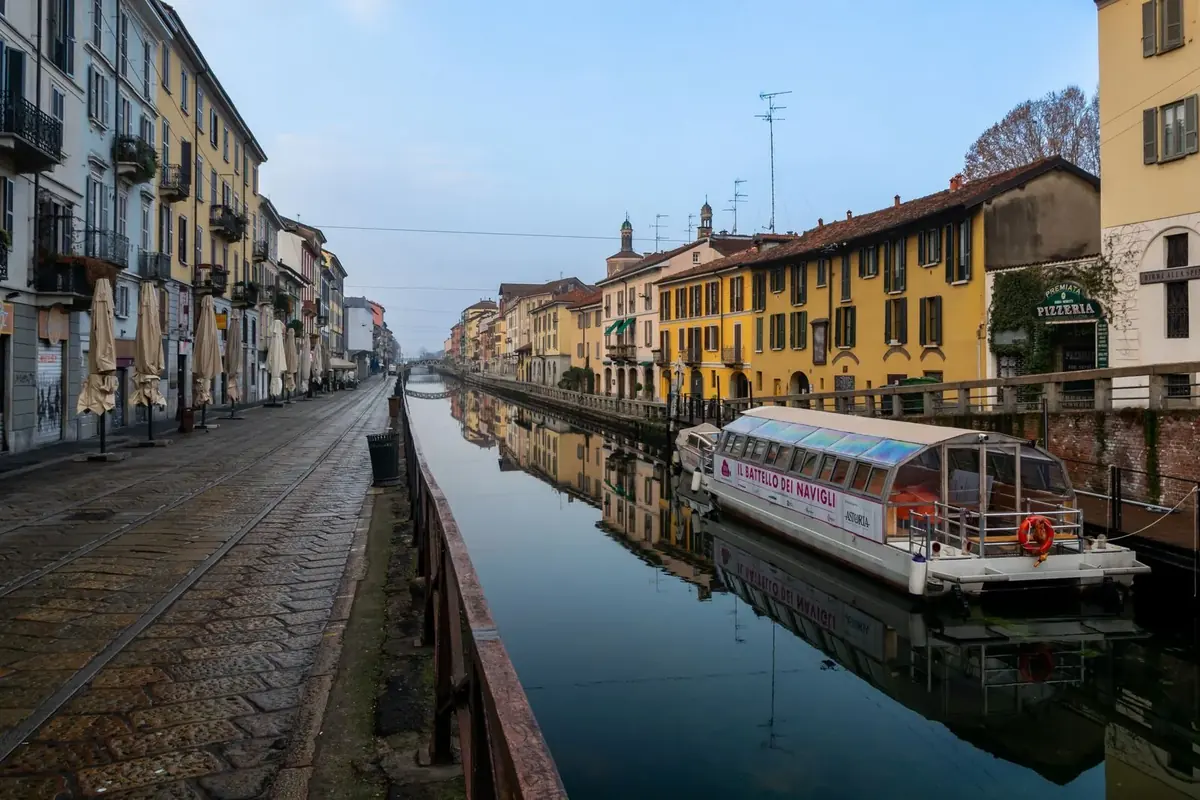
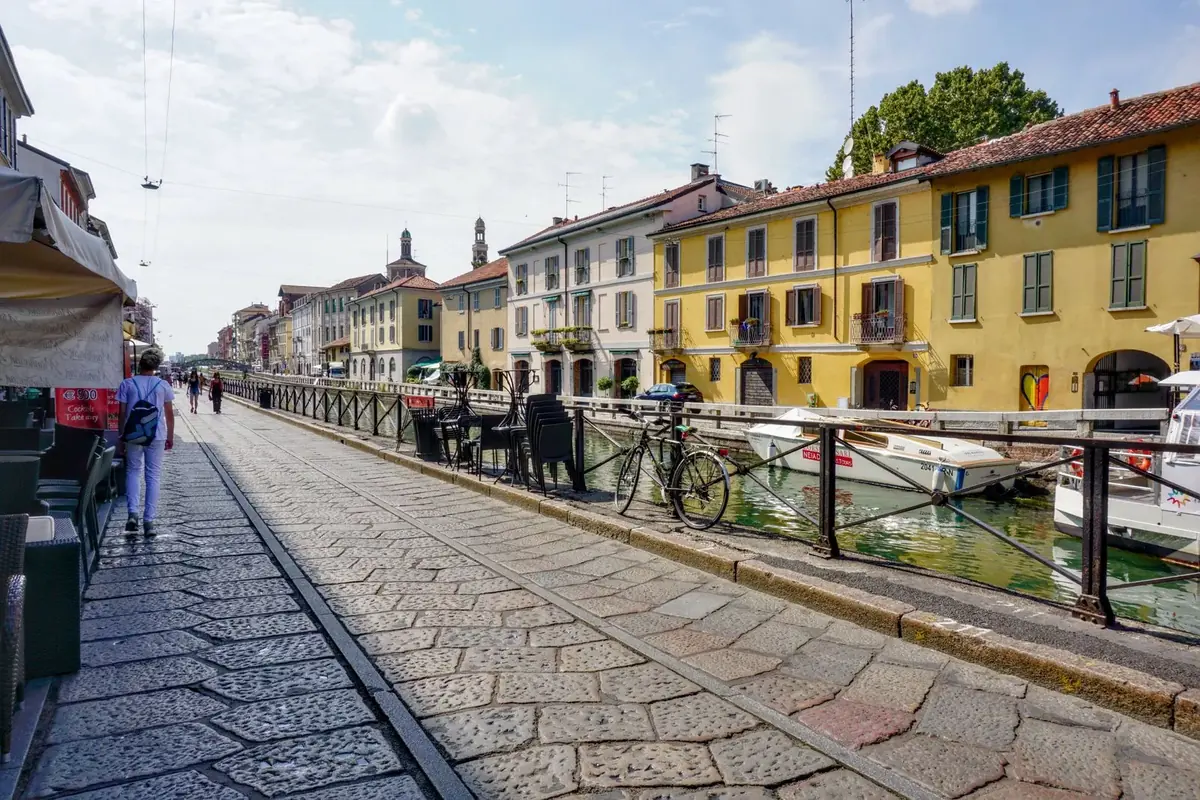
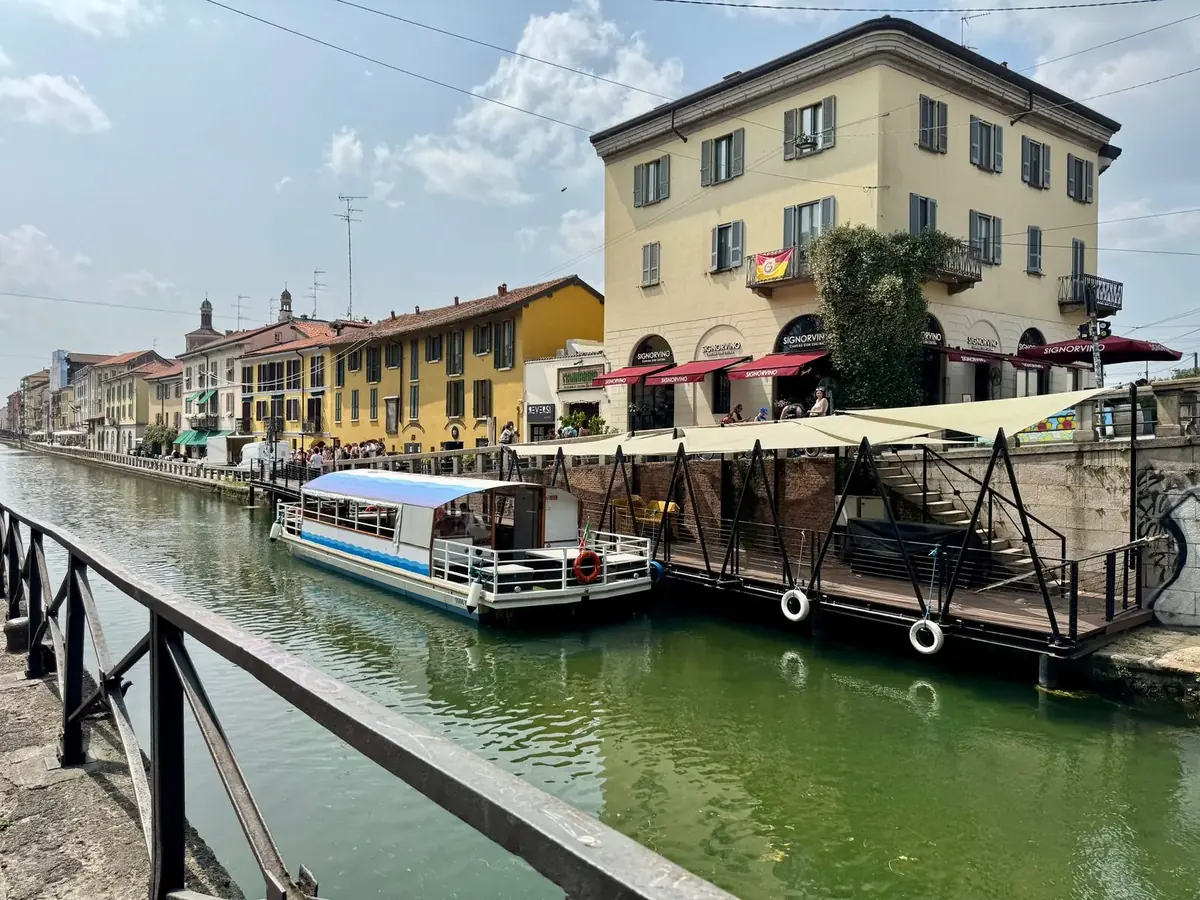
Navigli: Milan's Canal District Guide
Everything you need to know about Milan's Navigli — the canals, aperitivo bars, restaurants, the Sunday antique market, and when to visit.
Editorial guide · Updated 2025-01-01
Milan's Living Room
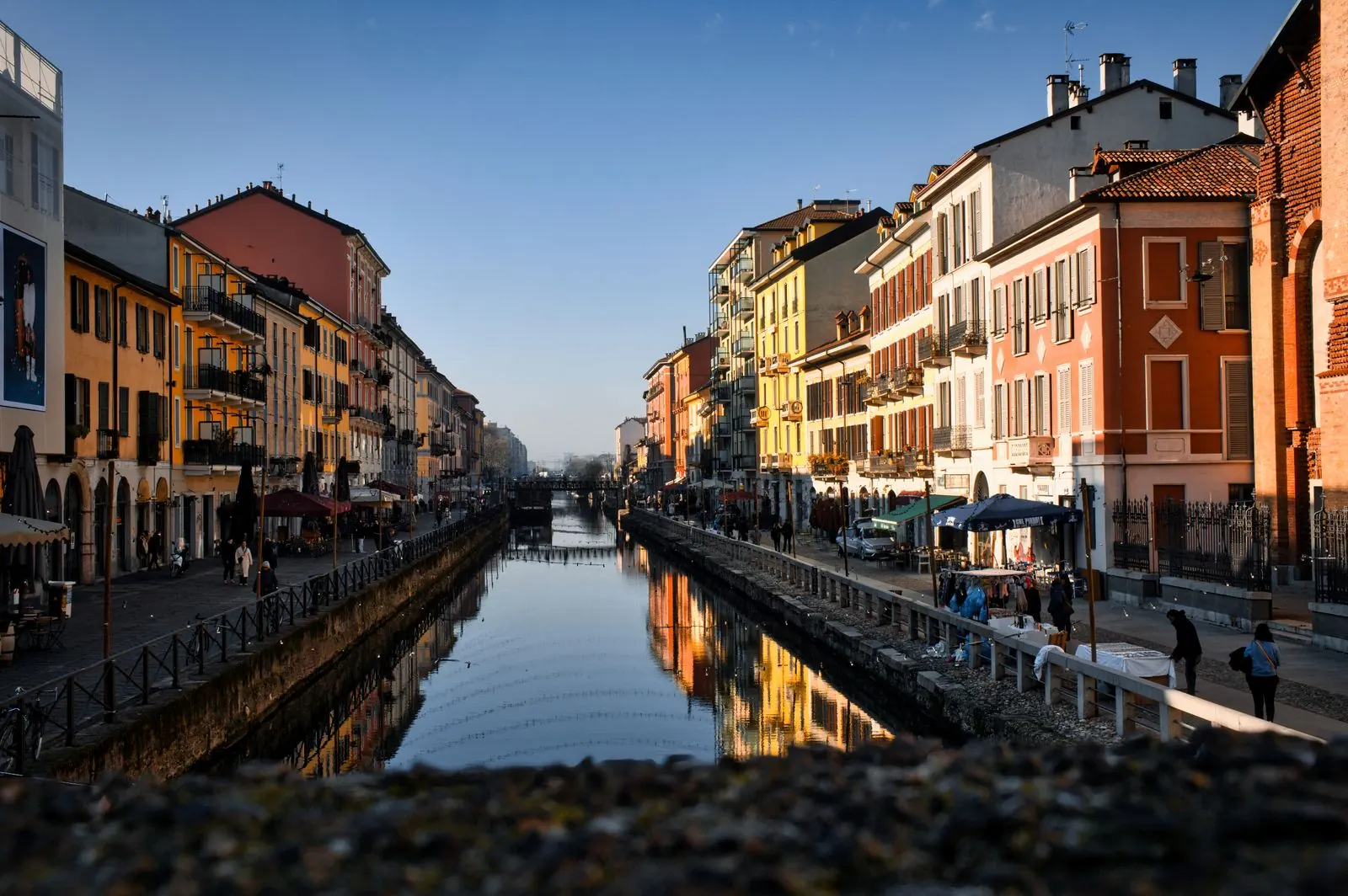
The Navigli is the neighbourhood where Milan stops performing and starts living. The rest of the city — the Galleria, the fashion district, the financial towers of Porta Nuova — is Milan presenting itself to the world. The Navigli is where Milanese people actually spend their evenings.
Leonardo da Vinci engineered the first of these canals in the 15th century, a waterway system that carried marble from the Alps quarries to build the Duomo. For centuries the Navigli were the city's industrial arteries — barges carrying goods, washerwomen working the banks, workers living in the narrow houses built directly above the water. In the 1970s, the city closed most of the canal network. The two remaining navigli — the Grande and the Pavese — became the backbone of the neighbourhood's leisure economy instead.
Today, the three kilometres of canal-side bars and restaurants between Porta Genova and the Darsena constitute the most sociable strip in Milan. Come here for aperitivo, dinner, late-night drinks, or Sunday morning to find 400 antique dealers setting up along the towpath.
Aperitivo: The Heart of Navigli
The aperitivo ritual is at its most theatrical and most authentic in the Navigli. Every bar along the canal from the Darsena to Piazza XXIV Maggio fills between 18:00 and 20:00 with a crowd that is half local, half tourist, and wholly committed to the idea that the working day is over.
What makes Navigli aperitivo different from other aperitivo districts is the density — you can walk the entire strip and compare three or four bars before settling on one, adjusting for how good the antipasto spread looks, how crowded the terrace is, and whether there's a seat with a view of the water.
The spread: At good Navigli aperitivo bars, the free food is dinner. Look for bruschette, arancini, mini pizza, stuffed peppers, prosciutto, mortadella. The bars with the most elaborate spread (Bere on Navigli, Goa, Spritz Milano) are not necessarily the best — the better question is whether the spread is fresh and replenished regularly.
The price: €8–12 for a Campari Spritz or Aperol Spritz. The free food is included. A €9 drink that comes with 300g of free food is excellent value; a €12 drink that comes with a few olives is not.
The timing: 18:00–19:30 is the golden window. By 20:00 the spread is depleted. By 20:30 the energy is shifting toward dinner.
The Sunday Antique Market
The last Sunday of every month, the Naviglio Grande becomes one of Italy's finest antique markets. 400 dealers set up along the towpath from Porta Ticinese to the Darsena — furniture, art, ceramics, vintage clothing, books, jewellery, and everything else that has accumulated in Lombardy for five centuries.
The market opens at 08:00 and closes at 18:00. The best dealers arrive early. The serious collectors arrive at 08:00–09:00; by 11:00 the best pieces are gone. By 13:00 the crowd has shifted to the aperitivo bars and the market has reached its social phase — less treasure-hunting, more atmosphere.
Browsing costs nothing even if you don't buy — it's one of several genuinely good, genuinely free things to do in this city. See our free things to do in Milan guide for the rest.
What to look for: Fornasetti pieces (the Milanese designer's work turns up regularly), mid-century Italian furniture, vintage Campari advertising, Murano glass (verify age), and leather goods.
Restaurants Worth Booking
The Navigli restaurant scene operates on two levels: the many bars and restaurants that exist primarily for the aperitivo crowd (adequate food, excellent atmosphere) and the smaller number of serious restaurants that are worth booking in their own right.
El Brellin is in the second category. An 18th-century wash-house built directly over the canal, converted into one of the neighbourhood's most atmospheric restaurants — risotto, brasato, a wine list that won't embarrass you, and a terrace directly above the Naviglio Grande. Book the terrace; specify you want canal-side seating when booking.
Carlo e Camilla in Segheria is the neighbourhood's most interesting dining destination — a converted sawmill with a single long communal table, Carlo Cracco's menu, and a theatrical atmosphere that makes dinner feel like an event rather than just food. Book weeks ahead.
Dry Milano Navigli serves the best pizza in the neighbourhood alongside serious cocktails. Queue or book; the negroni list is longer than most bars' entire cocktail menus.
Getting There
Metro: Porta Genova (M2 Green Line) is the Navigli's metro station. Exit and walk south toward the canal — you'll hear the aperitivo crowd before you see it.
Tram: Line 2, 9, 14, and 29/30 all serve the Navigli area. The tram is the correct way to arrive on a summer evening.
Walking: 25 minutes from the Duomo along Corso di Porta Ticinese — the walk through Ticinese takes you past the Roman columns of San Lorenzo Maggiore, which are worth five minutes of your time.
What Else is in the Neighbourhood
Darsena: The historic dock at the junction of the two navigli, now a wide piazza with bars on the water. The Mercato Comunale nearby is one of the city's better food markets.
Piazza XXIV Maggio: The neighbourhood's main square — less beautiful than the canal, more local. The aperitivo bars here are cheaper than the canal-side options and marginally less good.
Via Vigevano: The most beautiful street in Navigli — narrow, cobblestoned, with independent shops and the kind of neighbourhood life that larger streets don't accommodate. Walk it on your way between the canal and Porta Ticinese.
Antiques and vintage shops: The Navigli has the highest density of antique and vintage dealers in Milan, many of them open six days a week outside of the Sunday market. Via Naviglio Grande and the surrounding streets are the main concentration.
When to Go
Summer (June–August): Best for canal-side aperitivo — warm evenings, terrace culture, the full Navigli experience. Busiest with tourists; locals partly retreat to the mountains.
Autumn (September–November): The ideal season — locals are back, the crowds thin, the weather is mild enough for outdoor aperitivo. The Sunday antique market in October is the best of the year.
Winter (December–February): The canal-side atmosphere diminishes without the terrace culture. The restaurants are at their best (seasonal menus, cassoeula in February). Christmas market in December.
Spring (March–May): The city returns. The aperitivo culture re-emerges. Salone del Mobile in April transforms Navigli with pop-up installations and events.
In pictures