Free Things to Do in Milan: A Real Guide, Not Just Parks
Milan's best free experiences — the Galleria's arcade, Bosco Verticale, free-entry churches, Sunday markets, and which museums waive their fee once a month.
Editorial guide · Updated 2026-09-25
Milan has a reputation as an expensive city — fashion capital, Michelin stars, €15 spritzes — and that reputation is mostly earned. It's also mostly irrelevant to a full day of genuinely good things to do here for free. This isn't a list padded with "walk around and look at buildings." These are specific, real, worthwhile stops.
The Galleria Vittorio Emanuele II
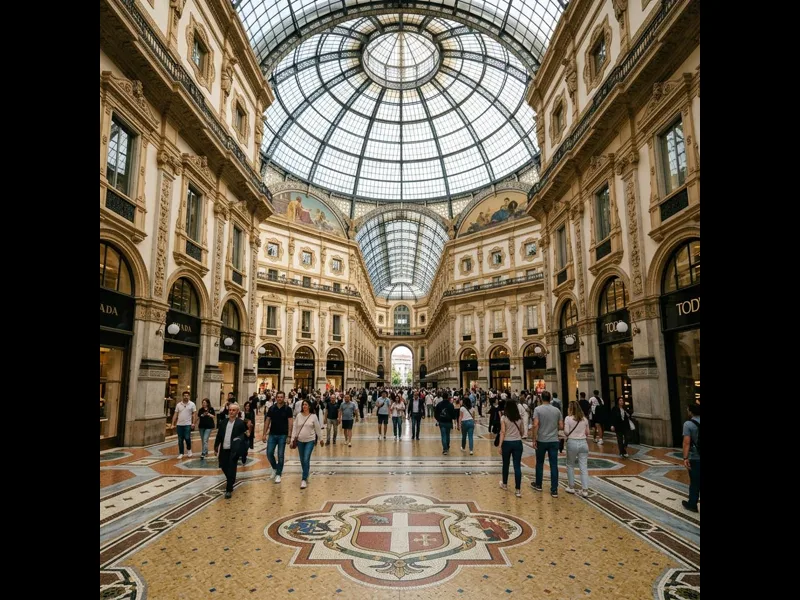
Milan's 19th-century glass-and-iron shopping arcade, connecting Piazza del Duomo to Piazza della Scala, costs nothing to walk through — and it's one of the most photographed interiors in Italy regardless. Historic cafés, flagship boutiques, and the mosaic floor everyone stands on for a photo (spin on the bull's testicles for luck, as the tradition goes) are all free to see. Go early morning or late evening for the arcade with fewer people in your photos.
Bosco Verticale
The "Vertical Forest" residential towers in Porta Nuova — two buildings wrapped in real, full-sized trees rather than decorative planters — are a genuine piece of contemporary architecture, not a gimmick, and viewing them from the street costs nothing. Combine with a walk through the rest of Porta Nuova's modern architecture cluster while you're there.
Free Churches (Including One with a Real "Wow")
Santa Maria delle Grazie — the church that houses Leonardo's Last Supper — is free to enter for the church itself; only the Cenacolo (the Last Supper mural) requires a separate, paid, pre-booked ticket. The church and Bramante's tribune are worth the visit on their own.
San Maurizio al Monastero Maggiore, near the Roman columns of San Lorenzo, is sometimes called Milan's Sistine Chapel — its interior is covered floor to ceiling in Renaissance frescoes, entry is free, and it's genuinely underrated: most visitors have never heard of it, which means you'll often have it largely to yourself.
Naviglio Grande and the Navigli Canals
Walking the canal district costs nothing, day or night, and it's arguably the best free activity in Milan regardless of budget — golden-hour light on the water, bars spilling onto the towpath, and (on Sundays) one of the city's best markets happening right alongside it.
The Navigli Antique Market
On the last Sunday of the month, the Naviglio Grande towpath fills with antique dealers, vintage clothing, vinyl, and genuine flea-market finds. Browsing costs nothing even if you don't buy — it's as much a people-watching event as a shopping one.
Parco Sempione and Castello Sforzesco's Courtyards
Parco Sempione, Milan's central park behind the Castello, is free and well worth an hour regardless of season. The Castello Sforzesco itself charges for its museums, but its courtyards and outer walls — genuinely impressive 15th-century fortress architecture — are free to walk through without a ticket.
Cimitero Monumentale
Milan's monumental cemetery functions as a free, open-air sculpture museum: elaborate Art Nouveau and neoclassical tombs built by the city's wealthiest 19th- and 20th-century families, several by major Italian sculptors. It sounds like an odd recommendation until you're standing in front of it — this consistently surprises visitors who expected a normal cemetery.
Free Museum Days
Italy's state-run museums (a category that includes some, not all, of Milan's collections) periodically waive entry fees — historically on the first Sunday of the month, under the national "domenica al museo" initiative. Rules, participating venues, and exceptions change, so confirm current details on the specific museum's official site before planning a visit around it — see our Milan museums guide for which collections are worth prioritising either way.
Window Shopping the Quadrilatero della Moda
You don't have to buy anything to enjoy Milan's fashion quarter around Via Montenapoleone. The window displays themselves are designed as spectacle, changed seasonally, and free to look at — treat it as an outdoor exhibition rather than a shopping trip if the prices aren't for you.
Practical Notes
The real cost isn't entry fees — it's food and drink. Most of what's on this list is genuinely free, no asterisk. Where you'll actually spend money in Milan is restaurants and bars, not sightseeing — budget accordingly rather than assuming a "free things" day means a free day.
Combine with aperitivo for a low-cost evening. A single reasonably priced drink during aperitivo hour (see our aperitivo guide) often comes with a substantial food spread included — not free, but close to it per euro spent.
Sundays are doing double duty. The Navigli Antique Market and potential free museum access both cluster on Sundays — a well-planned Sunday can be the single best-value day of a Milan trip.